Log in

Get your medical card online in minutes!

Get started

The federal hemp THC ban (November 12 and December 11, 2026): what’s banned, what’s still legal, and how to keep legal THC in your state
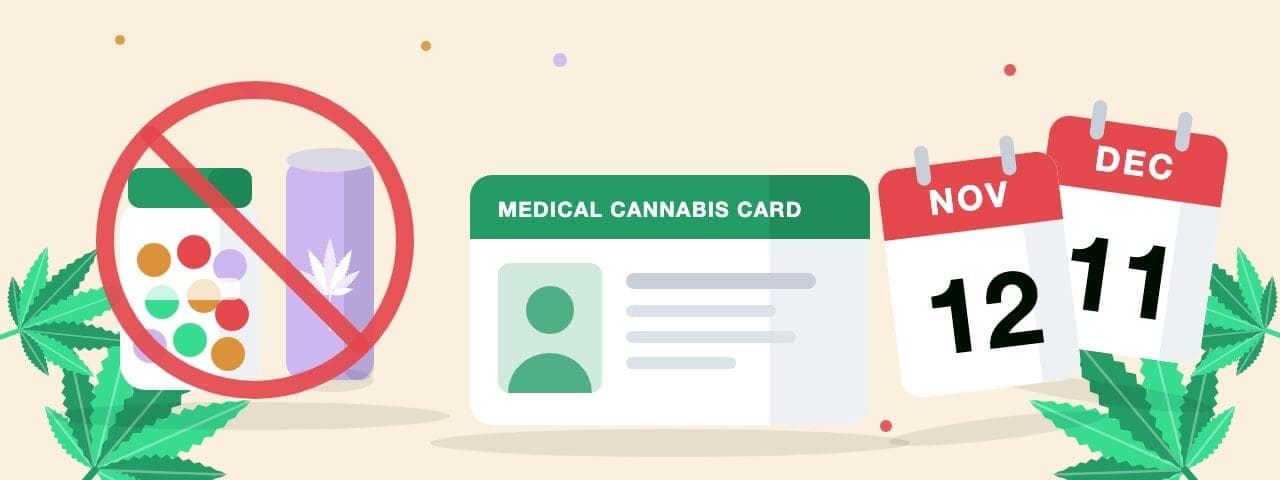
Illustration of hemp THC gummies and a THC drink crossed out beside a medical cannabis card and calendar pages for November 12 and December 11, 2026

Table of contents

  1. Key takeaways

Key takeaways

  • The federal hemp ban is a redefinition of “hemp” in Public Law 119-37 (Section 781). Products that no longer fit the definition become marijuana under the Controlled Substances Act.
  • Two dates: November 12, 2026 for cannabinoids the plant cannot naturally produce (THC-O and similar); December 11, 2026 for everything else, including the 0.4 mg total THC per container cap (delayed from Nov 12 by H.R. 6500, Public Law 119-103).
  • Delta-8, delta-10, THCA flower, hemp-derived delta-9 gummies and THC drinks all fail the 0.4 mg cap. CBD with no more than 0.4 mg total THC per container survives; full-spectrum is a gray zone.
  • State medical and adult-use programs are not affected. Dispensary products are already marijuana under state law. Texas, Ohio and California had restricted intoxicating hemp before the federal dates.
  • Bills to delay to 2028 (H.R. 7024 / S. 3686), repeal (H.R. 6209) or regulate (H.R. 9830, H.R. 10079) are all stuck in committee as of October 2026.
  • In medical-only states the medical card is the legal route that remains; in adult-use states it is one of two.

Frequently asked questions

When will the hemp ban take effect?

In two steps. On November 12, 2026, products containing cannabinoids the cannabis plant cannot naturally produce (THC-O and similar lab-made compounds) stop counting as hemp under federal law. On December 11, 2026, the rest of the new definition takes effect: the total-THC test (including THCA), the exclusion of natural cannabinoids made outside the plant, and the 0.4 mg total THC per container cap. The December date comes from H.R. 6500 (Public Law 119-103), signed September 2, 2026, which delayed most of the change by one month.

What does the hemp ban mean for delta-8?

Almost all delta-8 is made by converting CBD in a lab. Under the new federal definition, a cannabinoid that the plant can produce naturally but that was synthesized or manufactured outside the plant is not hemp, and that exclusion takes effect December 11, 2026. A delta-8 gummy or vape also carries far more than 0.4 mg of total THC per container, so it fails the cap on the same day. Some states acted earlier: Texas has treated delta-8 and similar converted cannabinoids as Schedule I under state law since July 31, 2026.

Will the hemp ban affect dispensaries?

No. The federal law changes the definition of hemp, not state marijuana laws. Everything sold in a state-licensed dispensary is already a marijuana product under state law, grown, tested and packaged under that state’s cannabis rules, and the ban does not touch those programs. Ohio’s Division of Cannabis Control and the California Department of Public Health both state that their hemp restrictions do not affect cannabis products sold in licensed dispensaries. The hemp ban removes the unlicensed version of THC and leaves the licensed one.

Will the hemp ban affect legal states?

Not their cannabis programs. State medical and adult-use laws already operate on the basis that their products are marijuana under federal law, so redefining hemp changes nothing for a dispensary, a card holder or an adult-use customer. What does change in legal states is the hemp aisle: gas-station delta-8 and hemp THC seltzers lose their federal cover everywhere on December 11, 2026. Some legal states had already restricted them: California since September 2024, Ohio since March 20, 2026.

Are THC drinks banned?

Hemp-derived THC drinks are, from December 11, 2026. A typical hemp seltzer carries 2 mg to 10 mg of THC per can, and the new federal cap is 0.4 mg of total THC per container, with the can counting as the container. The statute has no sell-through period for existing stock. THC beverages made and sold under a state cannabis program are not affected because they are regulated as marijuana, not hemp. A bill to regulate hemp beverages like alcohol (H.R. 10079) was introduced in August 2026 but has not moved past committee.

Is CBD banned under the hemp ban?

No. CBD isolate and broad-spectrum products with no more than 0.4 mg of total THC per container still fit the federal definition of hemp. Full-spectrum CBD is the gray zone: it usually contains trace THC, and whether a given bottle stays under 0.4 mg depends on the formulation and the size of the package. Industrial hemp grown for fiber, grain and seed oil is explicitly included in the new definition, and FDA-approved cannabis-derived drugs are carved out.

Is the hemp ban delayed?

It was delayed once, from November 12 to December 11, 2026, by the funding bill H.R. 6500 signed on September 2, 2026, and only for part of the definition. As of October 2026, bills to delay it further to 2028 (H.R. 7024 and S. 3686), repeal it (H.R. 6209) or replace it with regulation (H.R. 9830, H.R. 10079) are all in committee with no vote scheduled, and the House-passed 2026 Farm Bill does not delay or repeal it. Another short delay attached to a future funding bill is possible, but nothing is pending that would change the December 11 date today.